We had our dead pine trees cut down at the roadside. The electric company came out and chopped them down. They died in the drought from a couple of summers ago.
My helpers helped tremendously. My backdoor neighbor helped me drag them back to the bonfire. My Boy #1 helped out by skiing and riding along on the top branches. Here's a picture from last Saturday morning. It was a warm morning of 25 degrees, and we worked quick enough to beat the high winds of the day.
With their generous help, we were able to get both dead pine trees all put away in about an hour.
Friday, January 31, 2014
Sunday, January 26, 2014
Adios, Old Truck
Sold the 1999 Chevy Silverado truck today. A nice, younger man, bought it this afternoon.
It served me well in the years I had it. I bought it new off the lot with 18 miles on the odometer in October 1998. I sold it with just under 92,000 miles. I'm sad to see it go, but I'm happy it's going to a good home. The new owner appears to be very mechanically savvy, and will fix up the rusted doors and make it look like new.
Here's the last picture from a few days ago.
It served me well in the years I had it. I bought it new off the lot with 18 miles on the odometer in October 1998. I sold it with just under 92,000 miles. I'm sad to see it go, but I'm happy it's going to a good home. The new owner appears to be very mechanically savvy, and will fix up the rusted doors and make it look like new.
Here's the last picture from a few days ago.
Monday, January 6, 2014
Cold Days
A cold day here at the house. We woke up to see the following sights...
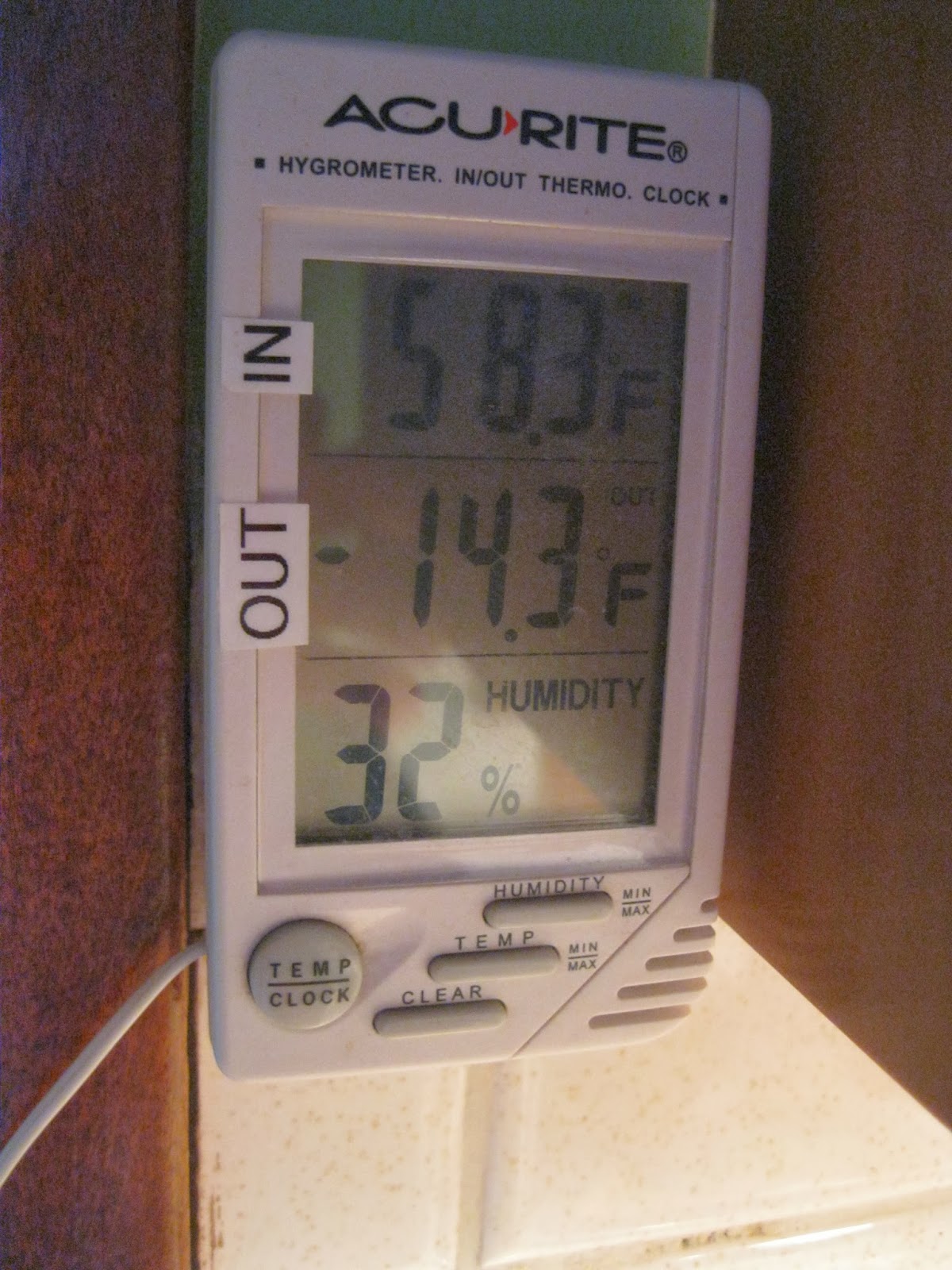
Work was cancelled, so we made french toast for breakfast and worked on a puzzle today. I'm sure we weren't the coldest around, but it was cold enough for all of us. With a -40 degree wind chill, we're happy to be in a warm house today.
Wednesday, January 1, 2014
A New Ride
After 14 years of nearly-faithful service, my daily driver truck is soon to be sold. We purchased this 2012 Silverado in southern Illinois just a few days after Christmas. We made a little mini-vacation out of the trip, and went to a Children's Museum and a hotel with a swimming pool along the way.
The 4-door crew cab allows lots of space in the back for the 3 kids. Being used, it's not perfect, but the price was right. We're blessed to be able to afford such a vehicle.
Happy New Years!
Monday, December 30, 2013
Friday, December 6, 2013
The Post Drill Refurb
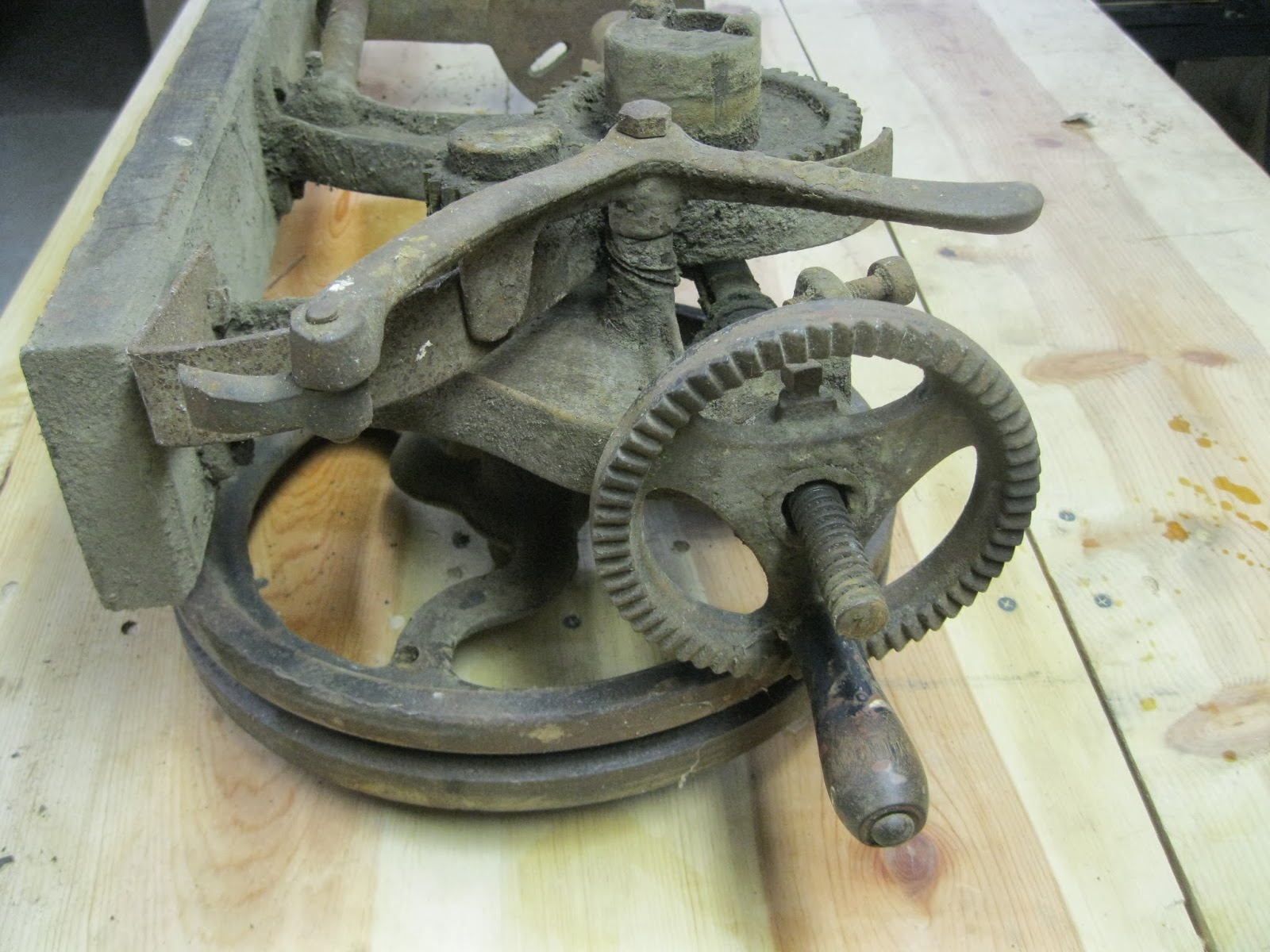
Dad gave me this old post drill a few weeks ago. As you can
see, it is pretty crudded up with 100+ years of grunge.
A post drill was a blacksmith's drill press. It was usually mounted on a post in their shop. They had a handle on the right side (mine is missing) that cranks the gears and turns the spindle. A large flywheel on the left kept the motion smooth and continuous. It has a cool little mechanism that automatically lowers the spindle as you crank the machine. This post drill was made by "Champion Blower and Forge Company" somewhere in the 1905 to 1910 era.
I did a little sandblasting, priming, and painting.
Now it hangs on a wall in the shop in the basement.
Who knew it could shine up so nicely. And the oak sure cleaned up well.
A few things left to do: I would like to fabricate a handle. I also have the keyless chuck that is pretty well frozen up, and I would like to get that working nicely.
A fun little project.
Thursday, November 21, 2013
Depth Gauge Gauge
Anatomy of a chainsaw chain:
Here is a picture of one cutting tooth. The depth gauge controls how much the cutting edge of the tooth will take off. The bigger the difference in height between the top of the depth gauge and the top of the cutting tooth will result in a bigger chip.
But, if that gap is too big, the chainsaw motor will bog down. If the gap is too small, you're not cutting as well as you could be. I have researched and found this gap should be about 0.025 to 0.030 for hard woods. If you're cutting softer woods, you can increase that gap up to 0.035 to 0.045, but that sounds like an awful lot to me.
Somehow, I needed to figure out a way to check the height of that depth gauge in relation to the top of the cutting tooth. I could just hold up a straight edge between a couple of cutting teeth, and see where the chain saw depth gauge is, but how do I quantify that?
Lo and behold, I thought up of a little device and fab'd it up - the Depth Gauge Gauge.
Then read the gauge. In this picture, I previously set zero to 0.030 below the plane of the cutting edge teeth, thus the gauge is showing 0.026 (that is 0.004 shy of 0.030).
My shopping list was:
1. A "plunger style" dial indicator - $3.99 off of Ebay.
2. A nice chunk of walnut - free from a friend.
3. A chunk of stainless steel - (a re-purposed 3/4" bolt)
4. Small screws - $0.49 at the hardware store.
The dial indicator was a steal. Just because it's old and ugly doesn't mean it won't work. It works just fine. Total travel distance is 0.100. The face shows 0 to 0.020 and then back to 0 for a total of 0.040 per one revolution.
The face of the gauge can be rotated to set zero at any plane. I made the gauge to provide a 0.050 stroke max - I don't foresee any depth gauge on my chainsaw being more than that height.
By making all the chain saw depth gauges to the same height, the chainsaw should run much smoother and shouldn't chatter in the log. After making this measuring device, I measured every tooth on the saw - all 39 of them. Depth gauge tooth ranged from 0.018 to 0.029. And now after a little filing, all 39 of the the depth gauge teeth range from 0.028 to 0.030. Smooth as silk.
Here is a picture of one cutting tooth. The depth gauge controls how much the cutting edge of the tooth will take off. The bigger the difference in height between the top of the depth gauge and the top of the cutting tooth will result in a bigger chip.
But, if that gap is too big, the chainsaw motor will bog down. If the gap is too small, you're not cutting as well as you could be. I have researched and found this gap should be about 0.025 to 0.030 for hard woods. If you're cutting softer woods, you can increase that gap up to 0.035 to 0.045, but that sounds like an awful lot to me.
Somehow, I needed to figure out a way to check the height of that depth gauge in relation to the top of the cutting tooth. I could just hold up a straight edge between a couple of cutting teeth, and see where the chain saw depth gauge is, but how do I quantify that?
Lo and behold, I thought up of a little device and fab'd it up - the Depth Gauge Gauge.
To use this crazy thing, I place it flat against the side of the
chainsaw bar, and then push it down on top of the cutting teeth.
It straddles 2 cutting teeth to create a flat plane.
My dial indicator is on the chain saw depth gauge.
Then read the gauge. In this picture, I previously set zero to 0.030 below the plane of the cutting edge teeth, thus the gauge is showing 0.026 (that is 0.004 shy of 0.030).
My shopping list was:
1. A "plunger style" dial indicator - $3.99 off of Ebay.
2. A nice chunk of walnut - free from a friend.
3. A chunk of stainless steel - (a re-purposed 3/4" bolt)
4. Small screws - $0.49 at the hardware store.
The dial indicator was a steal. Just because it's old and ugly doesn't mean it won't work. It works just fine. Total travel distance is 0.100. The face shows 0 to 0.020 and then back to 0 for a total of 0.040 per one revolution.
The face of the gauge can be rotated to set zero at any plane. I made the gauge to provide a 0.050 stroke max - I don't foresee any depth gauge on my chainsaw being more than that height.
Subscribe to:
Posts (Atom)
.jpg)